

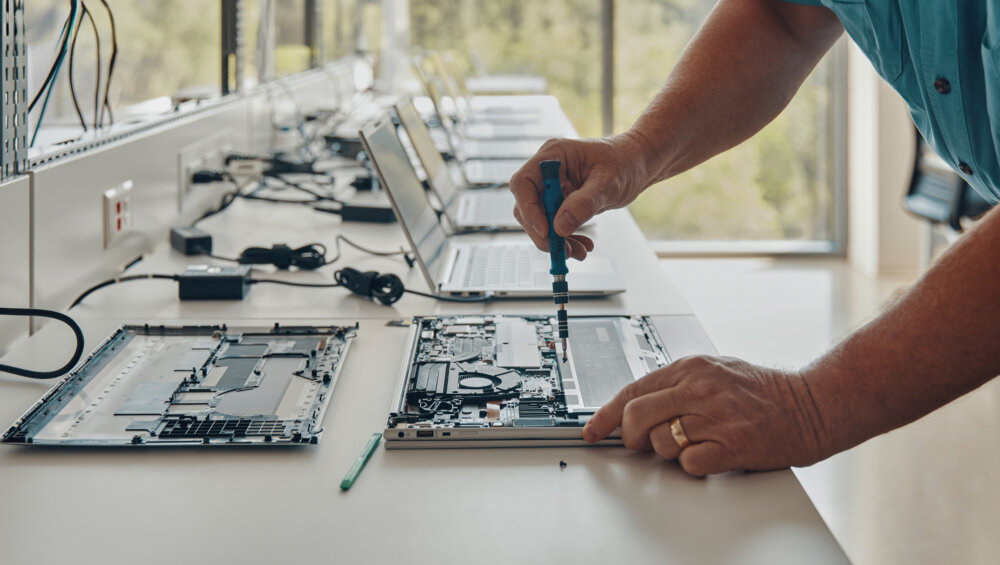
In the past, the refurbishment and reuse of laptops and PCs have not been a priority for enterprise IT teams. Recent research suggests that even now, due to a preference for replacing endpoints based solely on the age of the device rather than its performance, many organisations are frequently replacing endpoint devices unnecessarily, increasing both costs and environmental impact.
However, the situation could soon change. The global enterprise IT asset disposition (ITAD) market reached approximately $7.74 billion in 2025, reflecting how businesses are formalising the retirement, recycling and reuse of hardware. With the market expected to grow to more than $17 billion by 2032, it seems that enterprises increasingly see value in handling retired devices responsibly instead of simply discarding and replacing them.
Drivers for device extension programmes
Broadly speaking, there are two major drivers for refurbishing and renewing devices. The first, which is most relevant to IT buyers, is financial. “Whether as a planned saving or due to unexpected budget constraints, IT teams often wish to extend the life of their devices beyond the usual three-to-five years and achieve a greater return on investment,” says Matt Little, Solution Consultant for Tier 1 Global Sales at HP.
The second driver, which resonates most strongly with sustainability leads, is around reducing waste. Prematurely retiring devices has a disproportionate environmental impact because it accelerates manufacturing, which is the most resource- and carbon-intensive part of the technology life cycle.
Little comments: “Life-cycle assessments show that manufacturing accounts for the majority of a device’s total carbon footprint, often cited as up to around 70% of total life cycle emissions. When devices are replaced early, those emissions are repeated sooner than necessary, driving up emissions. This is why organisations are looking to extend their assets and look for services where they can renew and redeploy existing assets, finding efficiencies within the cold stock inventory.”
Short refresh cycles also contribute to a growing e-waste problem. Worldwide, the annual generation of e-waste is rising by 2.6 million tonnes every year and is on track to reach 82 million tonnes by 2030. Devices retired before the end of their functional life often sit unused in storage or enter disposal streams without a clear recovery or reuse pathway.
The business case for device refurbishment will vary from industry to industry. In people-centric organisations such as professional services firms, for example, technology is a core productivity tool, and extending device life cycles can deliver both employee value and a meaningful sustainability impact because IT represents a significant part of their operational footprint.
In contrast, for asset-heavy industries like energy or manufacturing, IT typically makes up a much smaller share of overall emissions, so refurbishment discussions are more likely to be driven by return on investment, cost control and operational efficiency. “In practice, refurbishment is rarely driven by sustainability alone and must align with the realities of each sector’s business priorities,” says Little.
Refurbishing responsibly: The need for data and insight
Regardless of how the case for refurbishment is made, once IT teams are given the go-ahead to carry out a programme, they need to also ensure that device life cycle extensions are carried out responsibly.
Joey Stork, Services Specialist for Tier 1 Enterprises at HP, says: “Extending device life cycles must carried out with due care. IT teams need to know which devices can be extended, which can be upgraded and which should be replaced, balancing performance needs with security considerations.”
“Ongoing visibility is also crucial. With continuous monitoring in place, extended or refurbished devices remain managed and secure, enabling IT teams to proactively identify risks, validate the feasibility of life cycle extensions and avoid negatively impacting the digital experience for employees,” adds Stork.
For IT leaders that are contemplating a device refurbishment strategy, Little recommends the following course of action:
- Audit assets and identify reuse opportunities. Leverage digital experience platforms like the HP Workforce Experience Platform to enable real-time visibility into device health, performance and usage to determine which assets can be redeployed, refurbished or reassigned.
- Extend life cycles through maintenance and upgrades. Proactively address performance bottlenecks, such as memory, storage or battery health to keep devices productive and secure for longer.
- Adopt sustainable procurement and circular design principles. Complement new device purchases with certified refurbished options through services like HP Renew, supporting circularity while maintaining enterprise-grade quality and reliability.
- Use secure ITAD and certified recycling programs. When devices can no longer be used internally, look for services that support secure data handling, refurbishment, resale or responsible recycling.
- Shift to needs-based refresh cycles. Replace age-based refresh policies with smart refreshes driven by data-based decisions sourced from platforms like WXP that reflect actual user experience, security posture and performance requirements.
- Integrate circularity into policies, contracts and KPIs. Embed life cycle extension, reuse targets and sustainability outcomes into governance frameworks to make responsible device management repeatable and measurable.
Extending device life cycles can reduce costs, cut waste and carbon and extract greater value from existing investments. By moving from age-based refresh cycles to data-driven decisions and by managing refurbishment and retirement responsibly, IT leaders can help balance their organisation’s performance, security and sustainability requirements.
Click here to find out how HP can help you rethink your device life cycle strategy, cut costs and drive sustainability in your business.